The bosch universal plus review: the kitchen hardware is a stand mixer worth considering if you regularly bake bread, prepare large batches, or want a machine with a different mixing design from conventional stand mixers. Its bottom-drive motor, large mixing bowl, and range of optional attachments make it an interesting alternative to popular planetary mixers.
But is it the right choice for your kitchen?
The answer depends on what you bake, how much you make at a time, and whether you prefer the Bosch’s mixing setup to a traditional stand mixer. Its design may appeal particularly to frequent bread bakers, while occasional bakers who mostly prepare cakes, cookies, and small batches may prefer a different machine.
If you are a home baker who regularly makes heavy bread dough, you already know the struggle. You hear your mixer straining, whining, and heating up as it tries to knead through a double batch of whole wheat dough. Eventually, the motor burns out, or the gears strip.
If you are looking for the best mixer for large families or heavy-duty baking, you’ve likely stumbled across the Bosch Universal Plus Stand Mixer. But is it actually worth the investment?
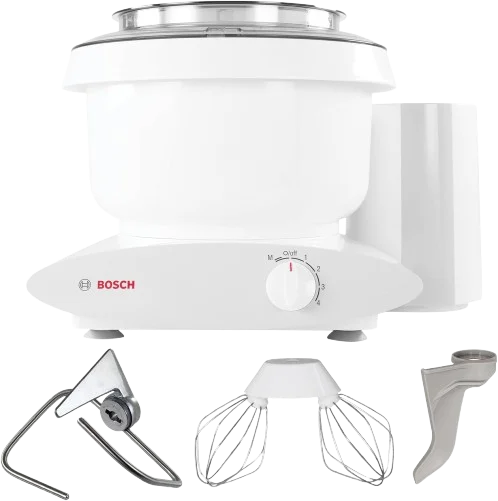
Bosch Universal Plus Stand Mixer
Universal Plus · 6.5-Quart Mixing Bowl
A bottom-drive stand mixer worth considering for bread baking and larger batches, with a 6.5-quart bowl and four speeds plus pulse. Check the exact listing for the included accessories and dough-hook extender.
Pros
- Large 6.5-quart mixing bowl
- Distinctive bottom-drive design
- Optional attachments available
Cons
- Different workflow from planetary mixers
- Large capacity may be unnecessary for small batches
As an Amazon Associate, MixerDecoded earns from qualifying purchases.
Bosch Universal Plus at a Glance
| Feature | Details |
|---|---|
| Product | Bosch Universal Plus stand mixer |
| Motor rating | 500 watts, according to the U.S. product documentation |
| Bowl capacity | 6.5 quarts |
| Mixing design | Bottom-drive motor |
| Speed settings | Four speeds plus pulse |
| Main use cases | General baking, bread dough, and larger batches |
| Optional accessories | Multiple attachments are available |
| Exact listing | Amazon ASIN B0CJCKHQGK |
| Bundle contents | Verify against the current Amazon listing before purchase |
In this Bosch Universal Plus stand mixer review, we are going to look at how it handles massive batches, what accessories you actually need, and the ultimate showdown: how it compares to the classic KitchenAid
In this article, we’ll cover:
What Makes the Bosch Universal Plus Different?
The most noticeable difference is its bottom-drive design. Rather than placing the motor in a tilting head or beneath a bowl-lift mechanism, the Universal Plus positions its motor below the mixing bowl.
This changes the way you interact with the machine. The bowl sits on the base, while the mixing tools connect to the drive above it. Bosch presents this arrangement as a way to handle substantial mixing loads while keeping the bowl accessible.
The design is particularly relevant for people who make bread regularly. Bread dough can place sustained demands on a mixer, so the machine’s intended workload, approved dough capacity, and recommended mixing procedure matter more than the wattage figure alone.
A different workflow from planetary mixers
Many familiar stand mixers use planetary mixing: the beater travels around the bowl while rotating on its own axis. The Bosch Universal Plus uses a different mixing arrangement.
That difference is worth understanding before buying. A mixer can be effective at one type of mixing without necessarily being the most convenient option for every recipe. Consider how you prepare dough, cake batter, whipped mixtures, and other foods rather than judging the machine by its design alone.
Is the Bosch Universal Plus Good for Bread Dough?
Bread baking is one of the main reasons to consider the Bosch Universal Plus. Its large bowl and bottom-drive arrangement make it a candidate for home bakers who prepare dough regularly or make larger batches.
However, a large bowl does not automatically establish how much dough a machine can mix successfully. The dough’s hydration, flour type, recipe, mixing time, and the manufacturer’s operating instructions all matter.
Before using the mixer for a particular recipe, check the manufacturer’s recommended limits for that type of dough. Do not assume that a stated bowl volume is equivalent to a safe or effective dough capacity.
Who may benefit most?
The Universal Plus is worth investigating if you:
- Bake bread frequently rather than only occasionally.
- Often prepare multiple loaves or larger quantities.
- Want a mixer that differs from the conventional tilt-head and bowl-lift designs.
- Value the possibility of adding compatible accessories for other kitchen tasks.
If you bake bread only occasionally, compare the price, footprint, included tools, and everyday convenience against a conventional stand mixer before deciding.
What Does the 6.5-Quart Bowl Mean in Practice?
The Universal Plus is marketed with a 6.5-quart bowl. That is a useful capacity reference, but bowl volume alone does not tell you the maximum quantity of every ingredient or recipe you can mix.
Dough is particularly important here. Its weight and consistency can create a very different workload from a bowl filled with a lighter cake batter. Follow the capacity guidance for the specific recipe and mixing tool rather than filling the bowl to its physical limit.
A large bowl can be useful for batch baking, but it may be less important if you usually make one small cake or a single batch of cookies. Consider your normal recipes, not just the largest batch you might make once or twice a year.
Motor Power and Speed Settings
Bosch Mixers USA lists the Universal Plus at 500 watts, with four speeds plus pulse.
The wattage needs context. Bosch explains that the U.S. rating changed from 800 watts to 500 watts following a change in how motor ratings were evaluated; the company states that the motor itself did not change as a result.
For that reason, comparisons based only on advertised wattage can be misleading. Motor rating alone does not establish mixing performance, dough capacity, durability, or superiority over another mixer.
When comparing models, also consider their mixing mechanisms, supported accessories, recommended batch sizes, warranty terms, and suitability for your regular recipes.
Accessories and the Dough-Hook Extender
One potential attraction of the Bosch Universal Plus is its broader accessory ecosystem. The manufacturer documents optional attachments for different kitchen tasks, so the mixer may offer more flexibility than a machine used only for mixing.
Before ordering, check the listing’s current “What’s in the box” information and product images. Confirm whether the extender is included, which dough hook it works with, and whether the seller identifies any additional accessories.
Do not buy an attachment based solely on a similar product name or appearance. Confirm compatibility with the exact mixer and accessory version.
Bosch Universal Plus Pros and Cons
Pros
- Large bowl: The documented 6.5-quart capacity may suit households that prepare substantial batches.
- Distinctive mixing design: The bottom-drive arrangement offers an alternative to conventional planetary stand mixers.
- Bread-baking potential: The machine is a candidate for frequent home bread baking, subject to its documented dough limits and operating instructions.
- Accessory options: The product family supports a range of optional attachments.
- Several speed settings: Four speeds plus pulse provide basic speed selection for different mixing tasks.
Cons
- Different operating workflow: Buyers accustomed to planetary mixers may need to adapt to the Bosch’s mixing arrangement.
- Capacity may be unnecessary: Occasional bakers and people who usually prepare small batches may not need a bowl this large.
- Bundle details require attention: The accessories included in a particular listing may differ from those shown on the manufacturer’s general product pages.
- Accessory costs can add up: Optional attachments should be included in your total budget if you plan to use them.
- Performance needs to be matched to the recipe: A large bowl and motor rating do not, by themselves, prove that the mixer is suitable for every dough or batch size.
These are evidence-based buying considerations, not claims from hands-on testing.
Bosch Universal Mixer vs KitchenAid: Which is better?
This is the most common question bakers ask. KitchenAid is beautiful and iconic, but the Bosch is built like a workhorse. Here is where they differ the most:
- The Drive System: KitchenAid mixers are “top-driven,” meaning the heavy motor is in the head of the machine. The Bosch is “bottom-driven.” The 800-watt motor is hidden in the base. This gives the Bosch a lower center of gravity, meaning it will never “walk” off your counter when kneading heavy dough.
- Bowl Capacity: The Bosch boasts a massive 6.5-quart bowl. Because there is no overhead motor blocking your view, it is incredibly easy to add ingredients while the mixer is running.
- Aesthetics vs Function: Let’s be honest—the KitchenAid looks prettier on a counter. But if you care about performance, kneading power, and not burning out a motor, the Bosch wins hands-down.
For a full model-by-model comparison, see our best stand mixers guide.
Bosch Universal Plus vs. Ankarsrum
The Bosch Universal Plus was considered as a possible replacement for the Ankarsrum Assistent Original in our dough-focused stand mixer roundup. Both are worth investigating for bread-oriented use, but they should not be treated as interchangeable.
Their mixing arrangements and workflows differ. The right choice depends on your recipes, preferred method of handling dough, batch sizes, included accessories, price, and available manufacturer support.
The Secret to Perfect Bosch Stand Mixer Bread Dough
If there is one reason to buy this machine, it is bread. The Bosch is famous for its dual dough hooks that mimic the motion of human hands.
Instead of just spinning the dough around a bowl, the Bosch stretches, folds, and tucks the dough. This develops the gluten much faster and more efficiently. You can easily knead up to 14 pounds of dough (that’s about 14 loaves of bread!) in a single batch without the machine breaking a sweat.
If you regularly make pizza dough, bagels, or whole-wheat loaves, the way this machine handles bread dough will change your life.
Best Bosch Stand Mixer Recipes to Try First
When you first unbox your machine, it can feel a little intimidating. Here are the best Bosch stand mixer recipes you should test first to see what it can do:
- Massive Batch Chocolate Chip Cookies: Use the wire whips and cookie paddles to cream your butter and sugar until perfectly light and fluffy. You can make up to 34 dozen cookies in one bowl.
- Cinnamon Rolls: The dough hook makes incredibly soft, enriched doughs.
- Shredded Chicken or Pork: Swap out the dough hook for the wire whips and toss your cooked chicken breasts in. The mixer will perfectly shred them for tacos in seconds.
Are the Bosch Mixer Attachments Worth It?
One of the best parts about the Bosch system is that it can replace half the appliances in your kitchen. But with so many options, which Bosch mixer attachments do you actually need?
- The Blender Attachment: (Highly Recommended) Because the motor is so powerful, the blender attachment crushes ice and purees soups just as well as a high-end Vitamix.
- The Cookie Paddles: (Must-Have) If you make heavy cookie doughs, the standard wire whips might bend. The cookie paddles are essential for thick batters.
- The Food Processor: (Optional) It works beautifully, but if you already own a standalone Cuisinart, you might not need it.
Is the Bosch Universal Plus Worth It?
The Bosch Universal Plus is worth considering if its mixing design, bowl capacity, and accessory options align with the way you bake. It is a particularly relevant candidate for people who regularly make bread or larger batches and want an alternative to a conventional planetary mixer.
It may be less compelling if you mostly bake small quantities, prefer the workflow of a tilt-head mixer, or would need to buy several extra accessories to get the functions you want.
Before purchasing, verify the exact Amazon bundle, the included dough tools, the manufacturer’s limits for your intended recipes, and the current warranty terms. These details are more useful for making a sound decision than relying on motor wattage or bowl size alone.
Frequently Asked Questions
Is the Bosch Universal Plus good for bread dough?
It is a product worth considering for bread baking, particularly if you regularly make larger batches. Check the manufacturer’s dough-capacity guidance and operating instructions for your intended recipe before use.
Does the Bosch mixer work well for small batches?
Yes, but you need to know a few tricks. Because the bowl is so large (6.5 quarts), you should use the included dough hook extender if you are only making 1 or 2 loaves of bread. For whipping, the standard wire whips reach all the way to the bottom and can successfully whip a single egg white into meringue.
Are the Bosch Universal Plus parts dishwasher safe?
The plastic and stainless steel mixing bowls, splash rings, and lids are all top-rack dishwasher safe. However, the removable drive shaft (the piece that sits inside the bowl) and the metal dough hook should always be washed by hand to prevent corrosion and damage.
Does the Bosch Universal Plus include a dough-hook extender?
It depends on the exact package. The Amazon listing being reviewed appears to include a NutriMill dough-hook extender, but buyers should confirm the current bundle contents before ordering.
Is the Bosch Universal Plus better than a KitchenAid?
Neither is automatically better for every baker. Compare the specific Bosch and KitchenAid models, their mixing designs, recommended capacities, included accessories, and suitability for your recipes.
Can the Bosch Universal Plus use additional attachments?
The product family supports a range of optional attachments. Confirm that each accessory is explicitly compatible with the exact mixer version before purchasing it.
How much dough can the Bosch Universal Plus actually handle?
The Bosch is famous for its capacity. It can easily handle up to 14 pounds of heavy bread dough at once (roughly 10-14 loaves of bread) without straining the motor.
Final Verdict about the Bosch Universal Plus Review
If you only bake a single batch of cupcakes twice a year, stick to a cheaper mixer. But if you are baking multiple loaves of bread weekly, making massive batches of cookies, or feeding a large family, the Bosch Universal Plus Stand Mixer is unparalleled.
The Bosch Universal Plus deserves a place on your shortlist if bread baking and larger batches are important parts of your kitchen routine. Its bottom-drive design and 6.5-quart bowl make it a distinctive alternative to conventional stand mixers, while its accessory ecosystem may appeal to people who want to expand beyond basic mixing.
However, the best choice depends on your real baking habits. Compare the exact package against other mixers, verify the accessories and operating limits, and avoid paying for capacity or add-ons you are unlikely to use.
For more options, explore our best stand mixers guide.
Last Updated on October 12, 2026 by Susan Joy