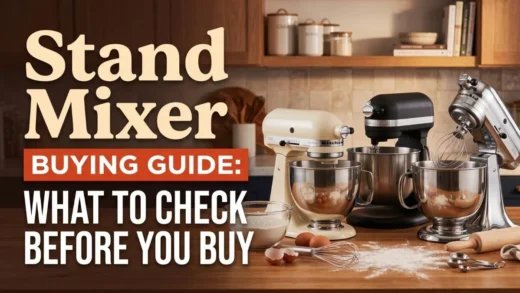
Choosing a stand mixer is easier when you start with what you bake, how often you bake, and how much food you make at a time. Bowl capacity, mixing design, dough-handling ability, included tools, and available counter space all affect whether a mixer will suit your kitchen.
A larger bowl or a higher wattage rating does not automatically mean better performance. The right mixer is one that handles your usual recipes reliably, accommodates your typical batch sizes, and fits your budget and kitchen.
This stand mixer buying guide explains what to look for before you buy, how to compare the main mixer designs, and which features matter most for different types of home baking.
In this article, we’ll cover:
Start With What You Plan to Make
Before comparing brands or specifications, identify the jobs you expect your mixer to perform. A mixer used mainly for cakes and cookies has different requirements from one used several times a week for bread and pizza dough.
| Your main use | What to prioritize |
|---|---|
| Cakes, cupcakes, and cookie dough | Reliable low-speed mixing, effective beater design, and convenient bowl access |
| Bread and pizza dough | Manufacturer-stated dough limits, appropriate mixing design, and suitability for repeated kneading |
| Whipped cream and meringue | Whisk performance, bowl geometry, and the ability to handle small quantities |
| Occasional general baking | Ease of use, storage, cleaning, and reasonable purchase cost |
| Large or frequent batches | Verified batch capacity, stability, workload suitability, and durability |
| Multiple kitchen tasks | Useful included tools and a compatible attachment ecosystem |
Think about your typical recipe rather than the largest batch you might make once a year. A mixer that comfortably handles your everyday baking is often a better purchase than a larger, heavier model that takes up unnecessary space.
Also consider whether you actually need a stand mixer. If you bake infrequently, prepare mostly small quantities, or have limited storage space, a hand mixer may be sufficient. A stand mixer becomes more compelling when you bake regularly, work with heavier mixtures, or want the convenience of hands-free mixing.
If you are still deciding which model best fits your baking habits, use our guide to compare the best stand mixers after identifying your main requirements. This helps you narrow the options by intended use rather than choosing a mixer based on specifications alone.
Understand the Main Types of Stand Mixer
Stand mixers use different mixing mechanisms. Understanding these designs helps you compare products more meaningfully than relying on brand names or motor ratings alone.
Planetary mixers
A planetary mixer typically uses a stationary bowl while the attachment rotates around its own axis and travels around the bowl. This movement helps distribute ingredients throughout the mixing area.
Planetary mixers are versatile choices for home baking. Depending on the model and included tools, they can mix cake batter, cream butter and sugar, whip egg whites, and knead dough.
However, performance varies between models. Bowl shape, attachment geometry, speed control, motor and transmission design, and minimum batch size all influence results.
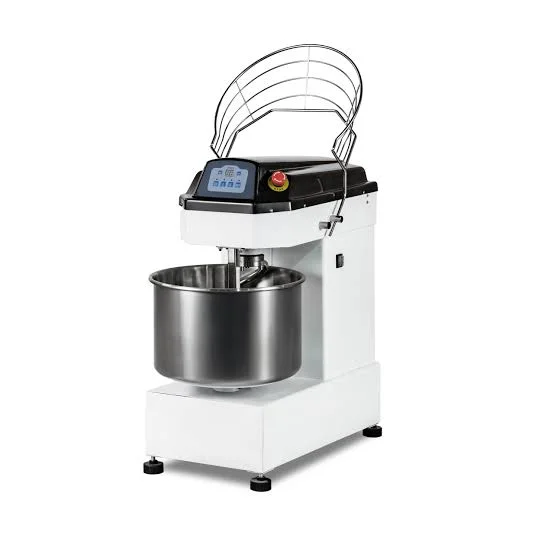
Spiral mixers
A spiral mixer uses a spiral-shaped dough hook and a rotating bowl to develop dough. Many are designed primarily for bread and pizza dough rather than the full range of tasks expected from a conventional stand mixer.
Some compact home models combine spiral-style kneading with separate tools for beating and whipping. The exact capabilities depend on the individual machine.
For example, the Ooni Halo Core uses a rotating bowl, spiral dough hook, and breaker bar. It is designed around dough preparation but also includes tools for other mixing tasks. This illustrates why buyers should assess a specific machine’s design and included equipment rather than assume every spiral mixer has the same capabilities.
For a practical example of this approach, see our Ooni Halo Core spiral mixer review, which examines a machine designed around dough preparation but supplied with additional mixing tools.
If you want to examine another spiral mixer designed for home baking, our Ooni Halo Pro review provides a closer look at its design, controls, and intended use.
Other mixing systems
Some mixers use distinctive bowl-drive or mixing mechanisms that do not fit neatly into a simple planetary-versus-spiral comparison. The Bosch Universal Plus, for example, uses a bottom-drive arrangement with an open-top bowl.
These alternatives can be worth considering, particularly if you bake bread regularly. Compare the manufacturer’s stated capabilities and the machine’s actual design rather than assuming that all stand mixers work in the same way.
Buying Tip: Choose the mixing system according to your workload. A dough-focused design may be attractive to frequent bread bakers, while a versatile planetary mixer may be more suitable for households that regularly make cakes, cookies, frostings, and dough.
Choose the Right Bowl Capacity
Bowl capacity is one of the most visible specifications on a stand mixer, but it is easy to misinterpret.
A larger bowl does not necessarily mean the mixer can handle every recipe in a larger quantity. The bowl’s shape, the attachment’s reach, the mixture’s consistency, and the machine’s approved workload all affect usable capacity.
Nominal capacity versus practical capacity
Keep these three concepts separate:
- Nominal bowl capacity: The stated volume of the bowl, usually expressed in quarts or liters.
- Usable batch capacity: The amount of a particular mixture the machine can process effectively under the manufacturer’s stated conditions.
- Minimum batch size: The smallest quantity that the attachment and bowl can mix or whip effectively.
These are not interchangeable measurements. A mixer may have a large bowl but struggle to reach a small amount of ingredients with its whisk. Another model may handle a particular dough quantity well but have a different limit for a soft batter.
What size stand mixer do you need?
| Baking pattern | How to choose |
|---|---|
| Small quantities and occasional baking | Prioritize effective small-batch mixing and convenient storage |
| Regular cakes, cookies, and family-sized recipes | Compare bowl capacity alongside attachment performance and the batch sizes you usually make |
| Frequent bread or pizza dough | Check the manufacturer’s dough limits and any restrictions for dough type or recipe |
| Large batches or frequent entertaining | Look for documented capacity appropriate to your recipes and workload |
| Several different batch sizes | Consider both maximum capacity and the machine’s ability to handle smaller quantities |
For a model-specific example of a larger bowl-lift mixer, see our KitchenAid 7-quart mixer review. Use the review alongside the manufacturer’s stated capacity limits to assess whether the model suits your usual batch sizes.
Do not use bowl volume alone to estimate how much bread dough a mixer can knead. Dough places different demands on a machine depending on hydration, flour type, mixing duration, and recipe size.
When a manufacturer publishes separate limits for dough, batter, or other mixtures, use the limit that matches your intended recipe. If those details are unavailable, do not assume that a bowl-size conversion will give you a reliable answer.
Why minimum batch size matters
Minimum batch size is often overlooked. A large whisk may not reach a single egg white effectively, and a beater may leave a small quantity of butter or sugar unmixed around the bowl.
If you frequently make half batches, small amounts of frosting, or one-egg recipes, look for evidence that the mixer handles those quantities well. A smaller mixer may suit your needs better than a larger model with a bowl and attachments designed for substantial batches.
Do Not Choose by Wattage Alone
Motor wattage is useful specification information, but it is not a universal measure of mixing performance.
Two mixers with different wattage ratings cannot be ranked reliably by that number alone. Motor ratings do not tell you everything about torque delivery, transmission efficiency, speed under load, cooling, attachment geometry, or the machine’s intended workload.
When comparing mixers, consider:
- The manufacturer’s stated limits for your intended mixtures.
- The design of the mixing mechanism and attachments.
- How the machine performs with the recipes you make.
- Whether the manufacturer specifies restrictions for prolonged or heavy mixing.
- Independent testing that explains the recipes and methods used.
Be particularly cautious when comparing a compact dough-focused mixer with a conventional planetary mixer. Their motor ratings may reflect different designs and intended tasks.
A higher wattage number is not, by itself, proof that one mixer kneads dough better, mixes more evenly, or will last longer.
Tilt-Head or Bowl-Lift?
The head or bowl mechanism affects how you access the bowl, change tools, add ingredients, and store the mixer.
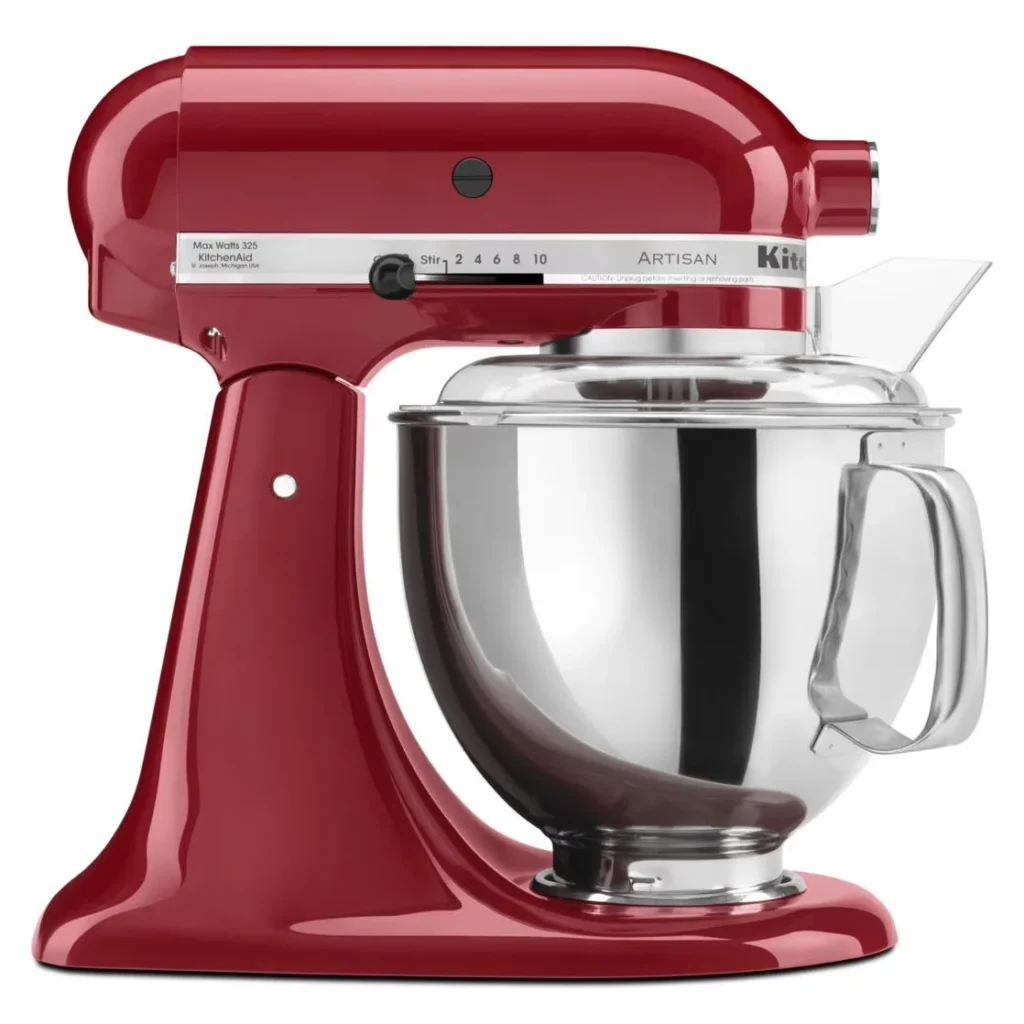
Tilt-head mixers
On a tilt-head design, the mixer head lifts to provide access to the bowl and attachment.
Potential advantages include:
- Convenient access when adding ingredients or changing tools.
- A familiar layout for general home baking.
- A design that may be convenient for smaller kitchens, depending on the model.
Potential drawbacks include the need for clearance above the machine and differences in stability or workload suitability between models.
For a familiar example of a tilt-head design, read our KitchenAid Artisan review. Consider its design alongside your available counter space, bowl access, and typical recipes when deciding whether a tilt-head mixer suits your kitchen.
Bowl-lift mixers
On a bowl-lift design, the head remains in place while a mechanism raises the bowl toward the attachment.
Potential advantages include:
- A fixed head during operation.
- A bowl-support arrangement that may suit certain larger or heavier-duty models.
- A design often found on mixers intended for substantial batches.
Potential drawbacks include a less open bowl area when changing attachments or adding ingredients, and a mechanism that may take more space or feel less convenient for some users.
Which is better?
Neither design is universally better. A bowl-lift mixer is not automatically the right choice for every serious baker, and a tilt-head mixer is not automatically limited to light-duty work.
Compare the specific models, their manufacturer-stated workloads, ease of access, height, footprint, and your most common recipes. The design should support your routine rather than determine it.
Check the Included Tools and Attachment Ecosystem
The included tools affect what you can do straight out of the box. Most conventional stand mixers are supplied with some combination of a beater, dough hook, and whisk, but the exact tools and their designs vary by model.
Common stand mixer attachments
| Tool | Typical use | What to check |
|---|---|---|
| Flat beater or mixing paddle | Cake mixtures, cookie dough, frostings, and general mixing | Whether its shape reaches the bowl effectively |
| Dough hook | Kneading bread, pizza, and other yeasted doughs | Whether the design and machine are suitable for your dough recipes |
| Wire whisk | Whipping cream, egg whites, and aerated mixtures | Whether it can handle your usual batch sizes |
| Flexible-edge beater | Scraping ingredients from parts of the bowl while mixing | Whether it is included or sold separately and approved for your model |
| Specialty attachments | Tasks such as pasta making, grinding, slicing, or shredding | Compatibility, additional cost, and whether you will actually use them |
Do not assume that an attachment fits simply because it carries the same brand name. Compatibility can depend on the exact mixer model, attachment interface, bowl design, and product generation.
If you are considering a KitchenAid mixer, check the exact model and the manufacturer’s compatibility information before buying extra bowls or attachments. MixerDecoded’s KitchenAid attachment compatibility guide can help you investigate this further.
Also compare the cost of the tools you need. A less expensive mixer may become a more costly purchase if essential accessories are sold separately.
Before buying extra bowls or accessories, check the exact mixer model and the manufacturer’s compatibility information. Our KitchenAid attachment compatibility guide explains why attachment fit should be confirmed rather than assumed. If you need a replacement or additional kneading tool, use our guide to find the correct dough hook for your mixer.
Consider Size, Weight, Noise, and Cleaning
A stand mixer can have excellent specifications and still be inconvenient in your kitchen.
Counter space and storage
Measure the available area before buying. Check the machine’s width, depth, height, and the clearance needed to lift a tilt-head or operate a bowl-lift mechanism.
If you plan to store the mixer in a cabinet, consider its weight and whether you can lift it safely and comfortably. A heavy mixer that stays on the counter may be more practical than one that is difficult to move every time you bake.
Stability and noise
Stability and noise vary by model and workload. A machine that handles a light cake batter quietly may behave differently when kneading a stiff dough.
Look for credible testing or reviews that describe the actual task performed. A general statement that a mixer is quiet or stable is less useful without information about the recipe and operating conditions.
Cleaning and everyday maintenance
Check which components are removable, which accessories are dishwasher-safe according to the manufacturer, and how easily you can reach the bowl and surrounding surfaces.
Pay attention to the shape of the bowl, the design of the tools, and any areas where ingredients may collect. Ease of cleaning matters most when the mixer will be used frequently.
Consider Warranty, Repairability, and Long-Term Cost
The purchase price is only part of the cost of owning a stand mixer.
Before buying, review the manufacturer’s warranty for the exact model and region. Do not assume that warranty duration or coverage is identical across a brand’s product range.
Also consider:
- Whether replacement parts are available.
- Whether the manufacturer provides service or repair information.
- The cost of essential replacement tools and bowls.
- Whether compatible accessories are easy to identify.
- Whether the machine’s size and capabilities are likely to remain suitable as your baking habits change.
Repairability can be difficult to judge from a product page alone. Parts availability, service arrangements, and repair costs may vary by region and over time. Treat these as questions to verify rather than assume that a higher-priced mixer will necessarily last longer.
For long-term ownership, compare the purchase price with the features you will use, the accessories you need, and the manufacturer’s support arrangements.
Before committing to a model, check whether the parts you may need are available and whether they can be identified for your exact machine. Our guide to stand mixer replacement parts is a useful next step if you want to understand the replacement-part side of long-term ownership.
Compare Models Using Evidence, Not Just Specifications
Once you have identified the type and size of mixer you need, compare a shortlist of specific models.
Use manufacturer documentation to establish specifications, included accessories, and stated capacity limits. Use independent testing and detailed reviews to understand performance in practice.
Keep the evidence categories separate:
- Manufacturer-confirmed information: Specifications, included tools, approved accessories, stated capacity limits, and warranty terms.
- Independent testing: Observed results from identified recipes and testing methods.
- Owner reports: Experiences that may help identify recurring issues but do not establish that every unit behaves the same way.
- Editorial conclusions: Judgments based on the evidence and the intended use case.
A useful comparison should explain why a feature matters to your workload, not merely list numbers.
For example, if two mixers have similar bowl capacities, compare their stated dough limits, minimum-batch performance, tool design, and suitability for repeated kneading. If those details are not documented, acknowledge that uncertainty rather than inventing a ranking.
When comparing different mixer designs, use model-specific reviews to investigate the details that matter to your workload. For example, our Bosch Universal Plus review provides a closer look at a bottom-drive mixer with an open-top bowl, allowing you to evaluate an alternative to conventional planetary designs.
Stand Mixer Buying Checklist
Before choosing a model, check the following:
- Intended use: Does the mixer suit the recipes I make most often?
- Batch capacity: Does the manufacturer specify a suitable capacity for my typical mixtures?
- Small batches: Can the bowl and attachments handle my smallest regular recipes?
- Dough handling: Are my dough types and batch sizes within the manufacturer’s stated limits?
- Mixing tools: Are the beater, dough hook, whisk, and any other essential tools included?
- Kitchen fit: Will the mixer fit beneath my cabinets, and can I access its bowl comfortably?
- Storage and weight: Can I leave it on the counter or move it safely when needed?
- Cleaning: Are the bowl and accessories convenient to clean?
- Ownership costs: What will essential accessories, replacement parts, and servicing cost?
- Evidence: Have I checked manufacturer documentation and credible performance testing rather than relying on specifications alone?
If a model fails an important requirement—such as handling your usual dough quantity—do not let extra features or a lower price distract you from that limitation.
Match the Mixer to Your Workload
The best stand mixer for one household may be a poor choice for another. Use your baking habits to narrow the options before comparing individual models.
For occasional home baking
Prioritize ease of use, storage, cleaning, and reliable performance with the recipes you make most often. Avoid paying for capacity or accessories that you are unlikely to use.
For cakes, cookies, and general baking
Look for effective mixing tools, good bowl access, useful speed control, and evidence of satisfactory performance with your usual recipes. If you often make small batches, pay particular attention to minimum-batch capability.
For regular bread and pizza dough
Start with the manufacturer’s stated dough capacity and any recipe restrictions. Consider the mixer design, intended workload, and evidence from tests involving dough similar to yours.
Do not choose a model solely because it has a large bowl or high wattage rating.
For frequent large batches
Look for documented capacity appropriate to your batch size and frequency of use. Check the manufacturer’s workload guidance, bowl support, dimensions, and the practical cost of accessories and maintenance.
A larger mixer may be appropriate, but only if it handles your usual quantities effectively and fits your kitchen.
For cooks who want multiple functions
Compare the included tools and the attachment ecosystem. If you expect to make pasta, grind ingredients, or slice and shred vegetables, confirm that the accessories you want are compatible with the exact model.
Consider the total cost of the mixer and the accessories rather than treating attachment availability as an automatic advantage.
Common Stand Mixer Buying Mistakes
Avoid these mistakes when comparing models:
- Choosing by bowl capacity alone. Nominal volume does not establish the maximum amount of every mixture the machine can handle.
- Assuming higher wattage means better performance. Wattage alone cannot establish mixing quality or dough-handling ability.
- Ignoring minimum batch size. A mixer that struggles with small quantities may be frustrating for everyday recipes.
- Buying more capacity than you need. A larger mixer can occupy more space and may not be ideal for small quantities.
- Assuming every stand mixer is equally good at kneading dough. Mixing systems, tools, and manufacturer-stated workloads differ.
- Overlooking included accessories. Essential tools may be included with one model but sold separately with another.
- Assuming attachments are interchangeable. Verify compatibility using the exact model number and manufacturer information.
- Ignoring the kitchen layout. Check height, footprint, storage, and access before buying.
- Treating owner reviews as controlled tests. Individual experiences are useful evidence, but they do not establish universal performance.
- Paying for features you will not use. Choose according to your actual baking routine, not a list of impressive specifications.
Once you have identified your preferred mixing design, capacity, and essential features, use our stand mixer recommendations to compare the models that best match your requirements.
Frequently Asked Questions
What should I look for when buying a stand mixer?
Start with your intended recipes and batch sizes. Then compare usable capacity, minimum-batch performance, mixing design, included tools, physical dimensions, workload guidance, warranty, and accessory compatibility. Choose a model that suits your routine rather than relying on a single specification.
What size stand mixer do I need?
The right size depends on how much you make and what you mix. Compare nominal bowl volume with the manufacturer’s stated capacity for your intended recipes. If you regularly make small batches, check minimum-batch performance as well as maximum capacity.
Does stand mixer wattage matter?
Yes, but it is only one specification. Wattage alone does not establish mixing performance, dough capacity, efficiency, or durability. Compare the manufacturer’s workload guidance and credible evidence from relevant recipes.
Is a tilt-head or bowl-lift mixer better?
Neither design is universally better. Tilt-head models provide access by lifting the head, while bowl-lift models raise the bowl toward a fixed head. Compare the specific models’ capacity, stability, access, dimensions, and intended workload.
Are spiral mixers better than planetary mixers for bread dough?
A spiral mixing system is designed around dough preparation and may be a good fit for frequent bread or pizza baking. Planetary mixers can also knead dough, depending on the model and its stated limits. The best choice depends on your recipes, batch sizes, and whether you need a versatile mixer for other tasks.
Is a stand mixer worth it for occasional baking?
Not necessarily. A hand mixer may be sufficient if you bake infrequently and mainly prepare light mixtures or small quantities. A stand mixer becomes more useful when you bake regularly, handle heavier mixtures, or value hands-free mixing.
How long should a stand mixer last?
There is no single lifespan that applies to every model or household. Longevity depends on construction, workload, maintenance, usage frequency, and access to repairs and replacement parts. Review the manufacturer’s warranty and support arrangements, but do not treat warranty duration as a guarantee of actual lifespan.
Can I use attachments from one stand mixer on another?
Not without checking compatibility. Attachment fit can depend on the mixer model, connection type, generation, and accessory design. Confirm compatibility with the manufacturer before purchasing or using an attachment.
Final Verdict: Stand Mixer Buying Guide
The right stand mixer is the one that suits your usual recipes, batch sizes, kitchen space, and budget.
Start by deciding what you will make most often. Then compare the mixing system, practical capacity, minimum-batch performance, included tools, physical dimensions, and manufacturer-stated workload. Use independent testing and detailed reviews to understand how shortlisted models perform in practice.
Do not let bowl volume or wattage decide the purchase on its own. A carefully matched mixer is more useful than a larger or more expensive model whose capabilities do not fit your baking routine.
Last Updated on October 15, 2026 by Susan Joy