Which dough hook fits my mixer depends on two things: your mixer’s bowl size and whether your model uses a C-shaped or spiral dough hook, since these two shapes are not interchangeable and serve different mixer categories entirely.
Which Dough Hook Fits Your KitchenAid Mixer?
The correct dough hook depends on your mixer type, not just the hook shape. C-shaped hooks are common on many tilt-head mixers, while spiral hooks are commonly used on larger bowl-lift models.
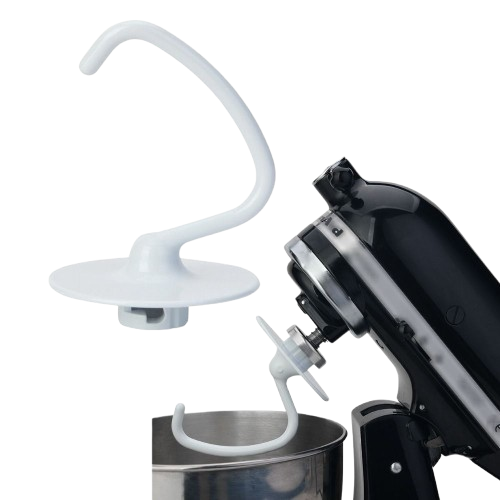
Best For Tilt-Head Mixers
- ✓ Artisan Series
- ✓ Classic Series
- ✓ K45 / K45SS Models
Designed for everyday bread, pizza dough, and general baking tasks.
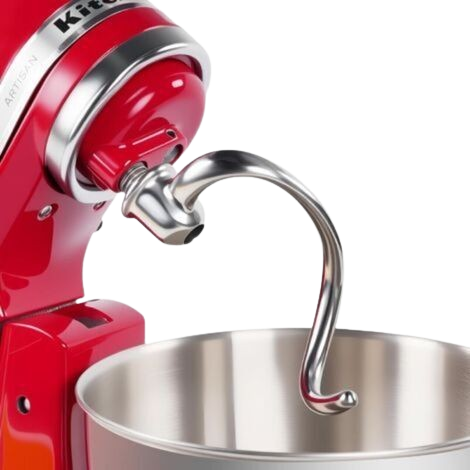
Best For Bowl-Lift Mixers
- ✓ Professional Series
- ✓ Larger Capacity Models
- ✓ Heavy Dough Mixing
Designed for stronger kneading performance with larger dough batches.
In this article, we’ll cover:
What Is the Difference Between a C-Shaped and Spiral Dough Hook?
A C-shaped dough hook, sometimes called a dough blade, uses a curved claw shape that mimics the motion of hand-kneading. A spiral dough hook uses a helical shape designed to move larger, denser batches of dough with less resistance. KitchenAid's own product comparison confirms that C-shaped hooks come standard on all tilt-head models and some bowl-lift models, while spiral hooks come standard on large-capacity bowl-lift models specifically built for heavier kneading tasks.
C-Shaped vs. Spiral Dough Hooks
Both hooks knead dough, but their design changes how they interact with the mixer bowl and the type of dough they handle best.
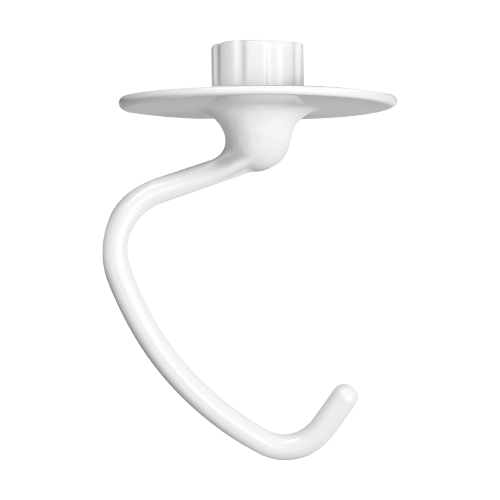
Traditional C-Shaped Design
Pushes and folds dough around the bowl during kneading.
Commonly found on many tilt-head KitchenAid mixers.
Ideal for everyday bread, pizza, and pastry dough.
MixerDecoded participates in the Amazon Associates Program and earns from qualifying purchases made through links on this page.
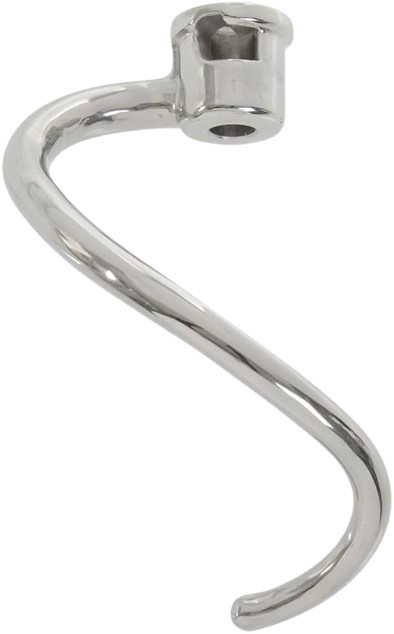
Spiral Dough Hook Design
Uses a spiral shape to move dough downward and around the bowl.
Commonly associated with larger bowl-lift KitchenAid mixers.
Designed for larger and heavier dough batches.
Why Can't I Use a Spiral Dough Hook in My Tilt-Head Mixer?
Spiral dough hooks require more torque, the rotational force needed to move dense dough, than tilt-head mixer motors are generally designed to produce. Tilt-head mixer motors and gear systems are built for lighter to moderate mixing tasks, while spiral hooks are engineered for commercial-grade motors handling large or heavy batches. Using a spiral hook in a tilt-head mixer risks demanding more from the motor than it's built to sustain, particularly with dense, high-hydration, or large-quantity dough.
Which Models Use a C-Shaped Dough Hook?
The following 4.5-quart and 5-quart tilt-head models use the standard C-shaped dough hook: K45, K45SS, KSM75, KSM90, KSM95, KSM96, KSM100, KSM103, KSM110, KSM150, KSM151, KSM152, KSM155, and KSM158.
Before purchasing a replacement hook, make sure you identify your KitchenAid model number because similar-looking mixers can use different attachment systems.
These models are part of the larger group of tilt-head KitchenAid mixers.
C-Shaped Dough Hook Models
These KitchenAid tilt-head mixers commonly use the standard C-shaped dough hook design.
Classic & Older Tilt-Head Models
- K45
- K45SS
- KSM75
- KSM90
- KSM95
Modern Tilt-Head Models
- KSM96
- KSM100
- KSM103
- KSM110
- KSM150
- KSM151
- KSM152
- KSM155
- KSM158
Always match the dough hook to your exact KitchenAid model number before purchasing a replacement.
Which Models Use a Spiral Dough Hook?
KitchenAid's official spiral dough hook is confirmed compatible with bowl-lift models starting with KSM75, KSM55, KSM60, and KSM70, specifically those using stainless steel bowls. KitchenAid states this attachment is not compatible with any model not on this list. Separately, commercial-grade spiral hooks are available for 7-quart and 8-quart bowl-lift commercial models.
KitchenAid Models Using Spiral Dough Hooks
These bowl-lift mixers commonly use spiral dough hook designs for heavier dough mixing.
Standard Bowl-Lift Models
- KSM75
- KSM55
- KSM60
- KSM70
These models are compatible with KitchenAid spiral dough hooks when using the correct bowl configuration.
Commercial Bowl-Lift Models
- 7 Quart Models
- 8 Quart Models
- Commercial Series
Commercial-grade spiral hooks are designed for larger capacity mixers and heavier dough workloads.
Do not assume every bowl-lift mixer uses the same spiral hook. Always confirm the exact model and bowl type before purchasing.
Dough Hook Compatibility at a Glance
| Hook Type | Bowl Size | Mixer Type | Confirmed Compatible Models |
|---|---|---|---|
| C-shaped | 4.5–5 qt | Tilt-head | K45, K45SS, KSM75, KSM90, KSM95, KSM96, KSM100, KSM103, KSM110, KSM111, KSM150, KSM151, KSM152, KSM155, KSM158, KSM160 |
| Spiral | 5–6 qt (select) | Bowl-lift only | KSM75, KSM55, KSM60, KSM70 series, KV25G0X, KV25G8X, KV25H0X, KP26M1X, KP26M8X, KL26M8X (stainless steel bowl required) |
| Spiral (commercial) | 7–8 qt | Bowl-lift, commercial | Commercial bowl-lift models rated for 7–8 quart capacity |
Find Your Dough Hook Match
Match your KitchenAid mixer style and bowl size to the correct dough hook design.
C-Shaped Dough Hook
- K45 / K45SS
- KSM75 Series
- KSM90–KSM160 Series
Commercial Spiral Hook
- Commercial Bowl-Lift
- Large Capacity Mixers
If you are unsure where to find it, use our guide on how to find your KitchenAid model number before choosing a replacement dough hook.
Coated vs. Stainless Steel Dough Hooks: Which Should You Choose?
KitchenAid dough hooks come in two material options, and this is a separate decision from the C-shaped versus spiral question above. According to KitchenAid's own product documentation, dough hooks vary by material, with some built in stainless steel and others featuring a non-stick coating.
Coated vs. Stainless Steel Dough Hooks
Both dough hook materials work with KitchenAid mixers, but the better choice depends on your baking habits, cleaning preference, and how often you make heavy dough.
Coated Dough Hook
- ✓ Easier cleanup after mixing
- ✓ Less dough sticking to the surface
- ✓ Traditional replacement option for many tilt-head models
- ✓ Common choice for everyday home baking
Home bakers who want the standard KitchenAid replacement option.
Stainless Steel Dough Hook
- ✓ No coating to wear away over time
- ✓ Stronger option for frequent baking
- ✓ Handles heavy dough workloads well
- ✓ Preferred by many experienced bakers
Frequent bakers who prioritize durability.
- Coated dough hooks use an aluminum core with an enamel or nylon coating over it. The coating means no aluminum contacts your food directly, resists oxidation, and makes cleanup easier since dough is less likely to stick to the surface.
- Stainless steel dough hooks have no coating to wear away over time, and tend to hold up better under heavy, frequent use, though some bakers find dough sticks to the surface slightly more than with a coated hook.
Both material types are generally dishwasher safe, but hand washing is commonly recommended to extend the coating's service life on coated hooks specifically, since repeated dishwasher cycles can wear a coating down faster than hand washing would. Experienced home bakers report that even coated hooks aren't fully immune to this, aluminum-core hooks can oxidize with repeated dishwasher exposure, and the coating itself is prone to chipping, sometimes during a kneading session rather than gradually over months.
There's also a practical, physical reason some bakers prefer stainless steel beyond corrosion resistance: the added weight. A heavier stainless steel hook can help anchor the mixer during kneading, reducing the shaking or walking covered in Why Is My Mixer Shaking?, since the hook's mass adds stability during vigorous mixing, on top of turning more solidly in the bowl.
The standard replacement part number for the coated C-shaped tilt-head dough hook is K45DH (also cross-referenced as W10674618), which fits the same 4.5–5 quart tilt-head models listed above. The equivalent stainless steel version for the same tilt-head size range is sold under part number KSM5THDHSS.
According to KitchenAid's own response to customer inquiries, its spiral dough hook design (marketed as PowerKnead) can knead up to 25 percent more dough, and at a faster rate, than the standard C-shaped hook, which is the underlying performance reason spiral hooks come standard on larger-capacity bowl-lift models rather than a simple size preference.
How Much Time Does a Dough Hook Actually Save?
This is worth knowing if you're deciding whether upgrading your dough hook setup is worth the cost. According to KitchenAid, kneading dough with a stand mixer for 2 minutes is roughly equivalent to kneading the same dough by hand for 10 to 12 minutes. Since kneading develops the gluten structure that gives bread its shape and texture, using the correct hook for your mixer and dough type isn't just about convenience, it's what allows the mixer to do that structural work efficiently in the first place.
Signs Your Dough Hook Needs Replacing
A dough hook doesn't need to be broken to be worth replacing. Watch for:
- Visible coating wear or chipping on a coated hook, since exposed aluminum underneath is more likely to react with acidic doughs over time and no longer offers the non-stick benefit the coating was designed for
- A bent or warped shaft, which can cause the uneven bowl contact covered earlier, even if the hook still technically locks into place
- Dough consistently sticking to the hook itself rather than being pulled into the developing dough ball, which is more common as a coating wears thin
- Difficulty locking the hook fully into the hub, which can indicate wear at the mounting point rather than the working end of the hook
How to Install and Remove a Dough Hook
The general process is consistent across tilt-head models: tilt the mixer head back to access the attachment hub, align the dough hook's shaft with the hub opening, then push up and twist to lock it into place. To remove it, press the release mechanism specific to your model (typically a button or lever near the hub) while turning and pulling the hook down and out. If a hook feels stuck rather than simply requiring the twist-lock motion, see Why Is My Attachment Stuck? for troubleshooting steps rather than forcing it.
Build quality varies meaningfully between manufacturers. One specialty attachment retailer that tests aftermarket hooks directly reports that many off-brand dough hooks contact the sides of the mixing bowl during use, causing the hook to wear or chip faster than a genuine hook designed to the correct tolerances. See Are Third-Party KitchenAid Attachments Safe to Use? for the full breakdown of warranty and quality considerations before buying aftermarket.
A Real Usability Quirk With C-Shaped Hooks
Experienced users of the standard C-shaped hook commonly report that dough tends to climb up the hook itself during kneading, rather than staying fully incorporated in the bowl. This isn't a defect, it's a known characteristic of the C-shape's motion, and it typically means pausing the mixer periodically to pull the dough back down before continuing, rather than letting it run uninterrupted for the full kneading time.
It's also worth knowing that overloading a tilt-head mixer with more dough than its C-shaped hook and motor are rated for carries real mechanical risk, not just a slower knead. Pushing a tilt-head mixer beyond its rated capacity has been linked to both overheating and gear wear, covered in more detail in Why Is My Mixer Overheating? and Why Is My Mixer Making Grinding Noise?. If you regularly find yourself fighting a small hook against too much dough, that's a signal to reduce batch size rather than push through it.
Pro Tips
- Match the hook to your typical dough, not just your mixer type. If you own a bowl-lift model that supports a spiral hook but you mostly make small batches of light dough, the standard C-shaped hook that came with your mixer may still be the better everyday choice.
- Check whether your bowl-lift model requires a stainless steel bowl for spiral hook compatibility. KitchenAid's own spiral hook listing specifies stainless steel bowls only, so a glass or ceramic bowl-lift bowl may not qualify even on a listed model.
- Don't judge a spiral hook's necessity by dough volume alone. Hydration level and gluten development also affect how much torque a batch demands, so a smaller but very stiff or dense dough can strain a tilt-head motor more than a larger, softer one.
- Inspect a new dough hook for bowl contact before running a full batch. Rotate it by hand first, the same clearance check used for beaters, to catch a poor-fitting aftermarket hook before it damages the bowl or the hook's coating.
- Hand wash a coated dough hook even though it's dishwasher safe. Repeated dishwasher cycles wear down the protective coating faster than hand washing, so if you want the coating to last, this small habit matters more than the material choice itself.
Frequently Asked Questions
Which dough hook fits a KitchenAid Artisan mixer?
The Artisan is a 4.5-quart or 5-quart tilt-head mixer, so it uses the standard C-shaped dough hook, not a spiral hook.
Can I put a spiral dough hook in a tilt-head KitchenAid mixer?
No. Spiral dough hooks are designed for the higher-torque motors used in large-capacity bowl-lift models. Tilt-head motors are generally built for lighter tasks and aren't designed to handle a spiral hook's torque demands.
Does every bowl-lift KitchenAid mixer use a spiral dough hook?
No. Some smaller bowl-lift models still use a C-shaped hook. Spiral hooks are specific to select bowl-lift models with stainless steel bowls, confirmed for the KSM75, KSM55, KSM60, and KSM70 series.
Will a dough hook labeled for one model fit a different but similarly sized model?
Not necessarily. Always check against your exact model number rather than assuming bowl size alone guarantees fit, since hook mounting and bowl material requirements can differ between similarly sized models.
Should I choose a coated or stainless steel dough hook?
A coated hook offers easier cleanup and prevents aluminum from contacting food directly, but the coating can wear over time, especially with frequent dishwasher use. A stainless steel hook has no coating to wear away and tends to hold up better under heavy, frequent use.
What is the part number for a standard KitchenAid tilt-head dough hook?
The standard coated C-shaped dough hook for 4.5–5 quart tilt-head models is part number K45DH, also cross-referenced as W10674618.
Final Thoughts about which Dough Hook Fits My Mixer
Dough hook compatibility comes down to two confirmable facts: your mixer's exact model number and whether it's built for a C-shaped or spiral hook. The distinction isn't arbitrary, it reflects a real difference in motor torque between tilt-head and large-capacity bowl-lift mixers, so using the wrong shape isn't just a fit issue, it's a mechanical mismatch. Confirm your model against the compatible list before buying a replacement or upgrade.
Related Reading:
How to Find and Decode Your KitchenAid Model Number
KitchenAid Attachment Compatibility Guide
Are Third-Party KitchenAid Attachments Safe to Use?
Why Is My Mixer Attachment Stuck?
Why Is My Mixer Making Grinding Noise?
Last Updated on September 21, 2026 by Susan Joy