The best stand mixers for bread dough depends on the types of dough you make, your batch sizes, and how often you bake. A dedicated spiral mixer may be ideal for bakers who regularly prepare pizza dough and yeasted breads, while a planetary stand mixer offers greater versatility for cakes, cookies, frostings, and other everyday kitchen tasks.
Our shortlist covers seven options for different needs: the Ooni Halo Pro, Ooni Halo Core, Bosch Universal Plus, KitchenAid Artisan, KitchenAid 5.5-quart Bowl-Lift, Cuisinart Precision Master SM-50NAS, and Winco EMP-20 commercial mixer.
Rather than ranking these machines as if they had all undergone the same performance tests, this guide compares their published specifications, intended uses, dough-capacity claims, and practical limitations. That distinction matters because bowl size and motor wattage alone do not establish how well a mixer handles a particular bread recipe.
In this article, we’ll cover:
The 7 Best Stand Mixers for Bread Dough
| Mixer | Best suited to | Key published specification |
|---|---|---|
| Ooni Halo Pro | Frequent home dough-making | 7.3-quart bowl; approximately 2–11 lb dough range |
| Ooni Halo Core | Smaller home dough batches | 4.8-quart bowl; approximately 1.1–5.5 lb dough range |
| Bosch Universal Plus | Higher-capacity home mixing | 6.5-quart bowl; capacity approaching 15 lb cited by Bosch Mixers USA |
| KitchenAid Artisan KSM150PS | General baking and occasional bread | 5-quart bowl; planetary mixing |
| KitchenAid 5.5-Quart Bowl-Lift | Regular bread-making with multipurpose use | Manufacturer states it can knead over 7 lb of bread dough |
| Cuisinart Precision Master SM-50NAS | Budget-oriented multipurpose mixing | 5.5-quart bowl; 500 W motor |
| Winco EMP-20 | Commercial-scale mixing | 20-litre bowl; commercial planetary design |
1. Ooni Halo Pro — Best Premium Home Spiral Mixer
The Ooni Halo Pro is a dedicated spiral mixer designed for home bakers who make dough regularly. Its 7.3-quart bowl and published dough range of approximately 2–11 lb make it a candidate for larger home batches of pizza dough, sourdough, and other yeasted breads.
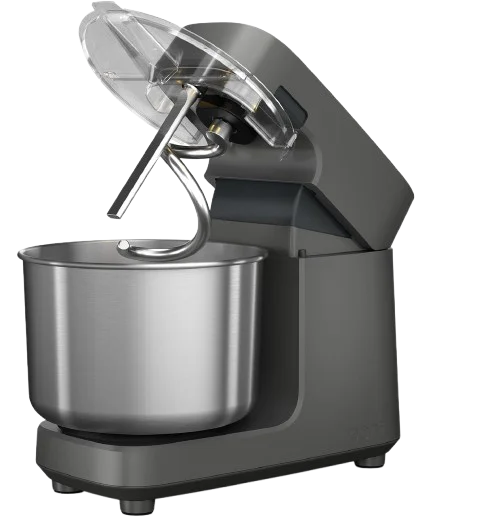
Unlike a conventional planetary stand mixer, the Halo Pro uses a spiral dough hook with a rotating bowl. This design is focused on dough preparation rather than providing a general-purpose mixing platform alone.
Ooni also advertises a broad selection of speed settings. The Halo Pro has 58 speed settings, compared with 20 on the smaller Halo Core. That gives users more adjustment options, although a greater number of settings does not by itself prove better mixing results.
Key specifications
- Bowl capacity: 7.3 quarts
- Published dough range: approximately 2–11 lb
- Speed settings: 58
- Mixing mechanism: spiral hook and rotating bowl
Why consider it?
The Halo Pro is worth considering if bread and pizza dough are central to your baking routine and you frequently make larger batches. Its published capacity is substantially higher than the Halo Core’s, making it the more appropriate Ooni option for many larger-batch requirements.
What to consider before buying
Its size, weight, and price make it a more substantial purchase than a conventional home stand mixer. It is also less compelling if most of your mixing involves cakes, cookies, and whipping.
Best for: Home bakers who prioritize dough preparation and regularly make larger batches.
For a closer look at its mixing mechanism, published capacity, included tools, and limitations, read our Ooni Halo Pro spiral mixer review.
2. Ooni Halo Core — Best Compact Spiral Mixer
The Ooni Halo Core offers a smaller-capacity alternative for home bakers who want a dedicated spiral mixer. Its 4.8-quart bowl and published dough range of approximately 1.1–5.5 lb position it for moderate batches of bread and pizza dough.
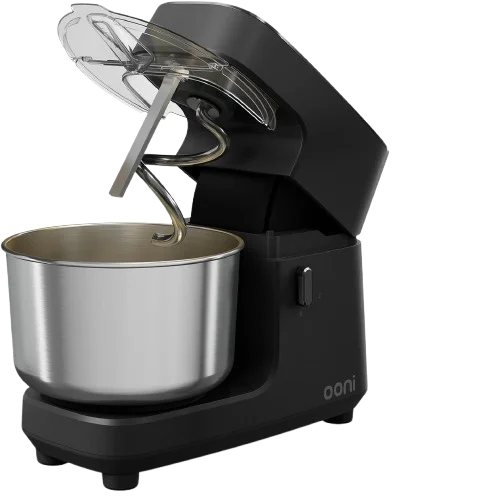
The Halo Core uses a dual-motor system rated at 300 W and provides 20 speed settings. It also comes with tools for beating and whipping, so its functionality extends beyond kneading.
Compared with the Halo Pro, the Core is lighter and has a smaller footprint. Its lower dough capacity may be an advantage for households that rarely need large batches.
Key specifications
- Bowl capacity: 4.8 quarts
- Published dough range: approximately 1.1–5.5 lb
- Motor rating: 300 W
- Speed settings: 20
- Mixing mechanism: spiral hook and rotating bowl
Why consider it?
The Halo Core is a candidate for home bakers who regularly prepare pizza dough or bread but do not need the Halo Pro’s larger capacity. Its published minimum batch size is also lower, which may better match smaller household recipes.
What to consider before buying
Its capacity still needs to be matched to the recipes you make most often. A dedicated spiral mixer may also be less versatile than a conventional planetary stand mixer for households that frequently prepare cake batter, cookies, and other mixtures.
Best for: Home bakers who want a smaller dedicated spiral mixer for regular dough-making.
If you want a more detailed breakdown of its 4.8-quart bowl, dough capacity, and intended use, see our Ooni Halo Core spiral mixer review.
3. Bosch Universal Plus — Best High-Capacity Home Mixer Candidate
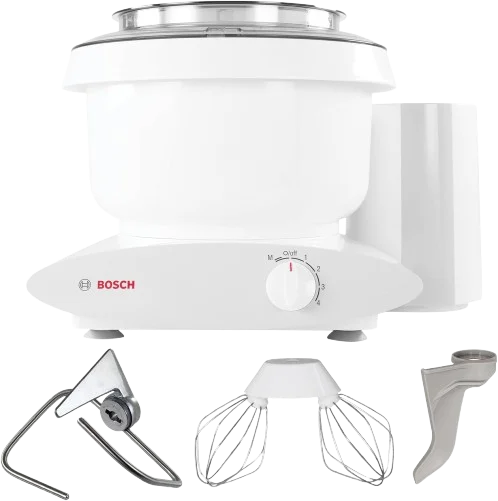
The Bosch Universal Plus takes a different approach from the familiar tilt-head and bowl-lift stand mixers. Its bottom-drive configuration and high-capacity design make it worth considering for households that regularly mix larger batches.
Key specifications
- Bowl capacity: 6.5 quarts
- Motor rating: 500 W for the documented MUM6N10UC
- Mixing arrangement: bottom-drive configuration
- Capacity 15 lb of dough
Why consider it?
The Universal Plus is a candidate for home bakers who need more batch capacity than a smaller multipurpose stand mixer provides. Its configuration is also distinct from traditional head-and-bowl designs, which some buyers may prefer for their mixing workflow.
What to consider before buying
Verify the full model number, the bowl, and attachments. Published capacity figures should not be treated as universal limits for every dough formulation. Consult the manual for the precise model and follow its instructions for ingredients, attachments, and operating conditions.
Best for: Home bakers who want a high-capacity multipurpose mixer and regularly make larger batches.
Our Bosch Universal Plus stand mixer review examines its bottom-drive design and the factors to consider when comparing it with conventional planetary mixers.
4. KitchenAid Artisan KSM150PS — Best All-Purpose Mixer for Occasional Bread
The KitchenAid Artisan KSM150PS is a conventional planetary stand mixer with a 5-quart bowl. It is designed for a wide range of kitchen tasks, including mixing, beating, whipping, and kneading when used with the appropriate attachment.
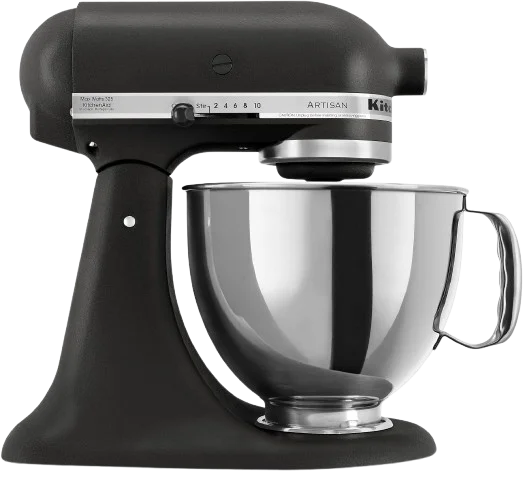
Its main advantage is versatility. A household that makes cookies and cakes throughout the year but only bakes bread occasionally may find a multipurpose stand mixer more practical than a dedicated spiral machine.
Key specifications
- Bowl capacity: 5 quarts
- Mixing mechanism: planetary
- Speed settings: 10 for the cited variant
- Motor rating: 325 W for the cited variant
Why consider it?
The Artisan is a practical candidate for households that want one appliance for general baking and occasional bread-making. Its tilt-head design also provides straightforward access to the bowl.
What to consider before buying
Do not assume the Artisan has the same dough capacity as a larger bowl-lift model or a dedicated spiral mixer. A 5-quart bowl does not establish the maximum safe dough load, and a recipe that fits physically inside the bowl may still exceed the manufacturer’s recommended limits.
Consult the manual for the exact model and follow its guidance on yeast dough, attachment choice, and speed.
Best for: General home bakers who make bread occasionally and need a versatile stand mixer.
For a fuller assessment of its everyday baking versatility, included tools, and limitations, read our KitchenAid Artisan 5-quart mixer review.
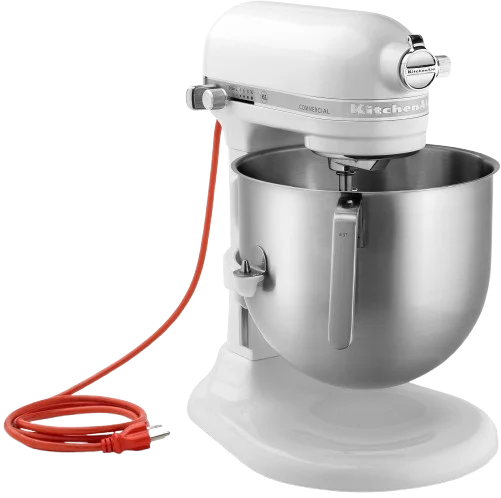
5. KitchenAid 5.5-Quart Bowl-Lift — Best Bowl-Lift Option for Regular Bread-Making
The KitchenAid 5.5-quart Bowl-Lift stand mixer is worth considering if you bake bread regularly but still want a multipurpose planetary mixer. Its bowl-lift design secures the bowl in position instead of using a tilting mixer head.
Key specifications
- Bowl capacity: 5.5 quarts
- Mixing mechanism: planetary
- Speed settings: 11
- Capacity: over 7 lb
Why consider it?
The Bowl-Lift is a candidate for households that make bread frequently and want a stand mixer for other baking tasks. Its published dough-capacity claim also gives buyers a more specific starting point than bowl volume alone.
What to consider before buying
Confirm the exact KSM55-series model and consult its manual before attempting large or stiff dough batches. Do not apply the dough-capacity figures of KitchenAid’s 7-quart models to the 5.5-quart version.
Best for: Regular home bread bakers who want a planetary stand mixer rather than a dedicated spiral mixer.
If you’re deciding whether a bowl-lift design suits your baking routine, our tilt-head vs. bowl-lift stand mixer comparison explains the practical differences. Check the instructions for the exact KSM55-series model before applying any capacity guidance
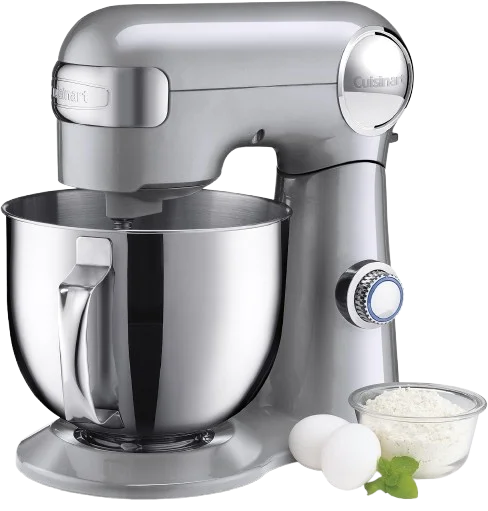
6. Cuisinart Precision Master SM-50NAS — Budget-Oriented Alternative
The Cuisinart Precision Master SM-50NAS is a 5.5-quart planetary stand mixer with a published 500 W motor rating and 12 speed settings. Its specifications make it a reasonable candidate for shoppers comparing multipurpose stand mixers at a lower price than some premium alternatives.
Key specifications
- Bowl capacity: 5.5 quarts
- Motor rating: 500 W
- Speed settings: 12
- Mixing mechanism: planetary
- Warranty: three-year limited warranty
Why consider it?
The SM-50NAS may appeal to shoppers who want a general-purpose stand mixer for everyday baking and occasional bread-making. Its published specifications provide a useful starting point for comparison with similarly sized models.
What to consider before buying
The 500 W rating does not prove that the Cuisinart handles heavier dough better than a lower-wattage competitor.
Best for: Buyers comparing multipurpose stand mixers who also plan to make bread occasionally.
7. Winco EMP-20 — Commercial Mixer for Large-Scale Dough Production
The Winco EMP-20 is a commercial planetary mixer intended for a different workload from the six home-oriented options above. Its 20-litre bowl, gear-driven transmission, and spiral dough hook make it relevant to commercial kitchens and other high-volume operations.
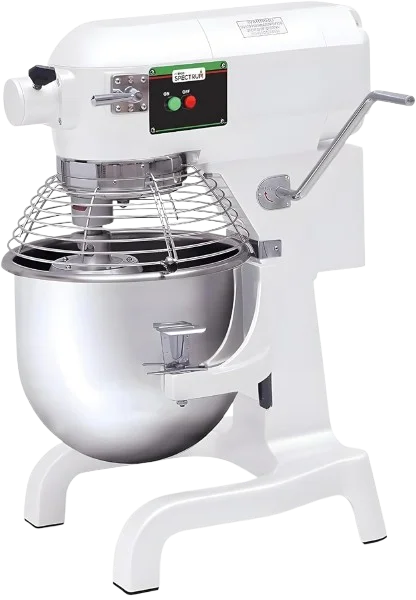
Winco’s operating manual specifies different maximum dough loads for different formulations. For example, it lists 15 lb for heavy bread dough at 55% hydration and 25 lb for bread and roll dough at 60% hydration.
Key specifications
- Bowl capacity: 20 litres, approximately 21.1 quarts
- Transmission: gear-driven
- Speed settings: 3
- Intended category: commercial planetary mixing
- Dough-load guidance: varies by formulation
Why consider it?
For a small bakery or commercial kitchen that regularly mixes large batches, a commercial machine may be more appropriate than a home stand mixer. The EMP-20’s manufacturer documentation provides formulation-specific dough-load guidelines that are more useful than bowl volume alone.
What to consider before buying
This is not a typical household mixer. Its size, weight, electrical requirements, and installation needs must be considered before purchase.
Best for: Commercial users who need large-batch mixing capacity and can accommodate a commercial appliance.
How to Choose the Best Mixer for Bread Dough
Choosing the right mixer starts with the dough you make most often. A machine that works for small sandwich loaves may not be the best choice for stiff bagel dough or repeated commercial batches.
1. Match the Mixer to Your Dough
Different recipes place different demands on a mixer.
- Sandwich bread: A suitable planetary stand mixer may be sufficient for occasional or moderate batches.
- Sourdough: Consider the recipe’s hydration, batch size, and mixing method rather than relying on the bread’s name alone.
- Pizza dough: A dedicated spiral mixer may appeal to bakers who prepare pizza dough frequently.
- Stiff bagel dough: Check the manufacturer’s specific dough-load limits and operating instructions before buying.
- Large batches: Compare the maximum permitted load, minimum workable batch, and any restrictions on repeated mixing.
The key is to match the machine to the actual recipe and workload rather than choosing based on a broad category such as “bread mixer.”
2. Compare Dough Capacity, Not Just Bowl Size
Bowl volume and dough capacity are different measurements. A large bowl does not automatically mean a mixer can safely knead a large quantity of every dough type.
When available, compare three figures:
- Minimum dough load: The smallest batch the manufacturer says the mixer can handle.
- Maximum dough load: The upper limit under the manufacturer’s stated conditions.
- Your usual batch size: The amount you actually prepare most often.
Also check whether the manufacturer specifies different limits for different hydration levels, flour types, or operating speeds. A maximum load listed for one formulation should not automatically be applied to a stiffer recipe.
3. Understand Spiral vs. Planetary Mixing
A planetary stand mixer generally uses an attachment that rotates while moving around the bowl. This arrangement supports multiple tasks, including beating, whipping, and kneading with the appropriate attachment.
A spiral mixer uses a spiral-shaped dough tool and typically rotates the bowl as part of the mixing process. It is designed primarily for dough preparation.
Neither design is automatically best for every baker. A spiral mixer may suit someone who prioritizes frequent dough-making, while a planetary mixer may be more useful for a household that needs one appliance for a wider range of recipes.
4. Do Not Choose by Motor Wattage Alone
Motor wattage is not a standardized measure of how effectively a mixer kneads dough under load. It does not, by itself, establish the useful torque delivered to the mixing attachment or the maximum dough quantity the machine can handle.
Mixer design, gearing, speed, attachments, thermal management, and manufacturer operating limits also matter.
For example, the Cuisinart SM-50NAS has a published 500 W rating, while the KitchenAid Artisan variant cited in this guide has a 325 W rating. Those numbers alone do not establish which model performs better with bread dough.
Prioritize documented dough capacity and model-specific instructions over wattage comparisons.
5. Consider Dough Temperature
Mixing contributes heat to dough, which can affect fermentation and the handling of the finished dough. The final temperature depends on several factors, including ingredient temperature, room conditions, batch size, mixing duration, and mixer design.
If your recipe specifies a target dough temperature, measure it rather than assuming a particular appliance will produce the correct result. Adjust ingredient temperatures or mixing technique when necessary.
6. Account for Size, Cleaning, and Practical Use
A mixer that is appropriate for a bakery may be inconvenient in a small home kitchen. Before buying, consider:
- Counter or floor space
- Machine weight and storage
- Cleaning requirements
- Included attachments
- Electrical requirements
- Minimum and maximum batch sizes
- Current availability and warranty terms
A large mixer is not necessarily a better purchase if you usually prepare small batches.
Before choosing a model, use our stand mixer buying guide to compare capacity, mixing design, workload, and other purchase factors.
If you need to identify the correct kneading attachment for a mixer you already own, our guide to which dough hook fits your mixer explains why hook shape and model compatibility matter.
Three Mistakes to Avoid When Buying a Bread Mixer
Mistake 1: Choosing by Wattage Alone
A higher wattage number does not automatically mean a mixer can handle heavier bread dough. Compare the manufacturer’s dough-load guidance, attachment design, operating instructions, and other relevant specifications instead.
Mistake 2: Ignoring Dough Temperature and Mixing Conditions
Dough temperature and development depend on more than the mixer. Ingredient temperatures, hydration, batch size, and mixing duration all influence the result. Measure dough temperature when it matters to your recipe and follow the manufacturer’s instructions for the selected mixer.
Mistake 3: Buying the Wrong Capacity
A mixer may be too small for your usual batch or unnecessarily large for your kitchen. Compare its minimum and maximum dough loads with the amount you make most often. Pay attention to formulation-specific limits rather than assuming every dough can be mixed up to the same maximum weight.
Which Mixer Is Best for Your Type of Bread?
| Your needs | What to consider |
|---|---|
| Occasional bread and general baking | KitchenAid Artisan or Cuisinart SM-50NAS |
| Regular bread-making with a planetary mixer | KitchenAid 5.5-quart Bowl-Lift |
| Larger home dough batches | Bosch Universal Plus, subject to exact model and capacity guidance |
| Dedicated spiral mixing for moderate batches | Ooni Halo Core |
| Dedicated spiral mixing for larger batches | Ooni Halo Pro |
| Commercial-scale dough production | Winco EMP-20, if available and suitable for the installation |
For sourdough, consider the actual hydration, quantity, and mixing routine.
For stiff bagel dough, prioritize model-specific manufacturer limits.
For pizza dough, a spiral mixer may be attractive if dough preparation is your main use, but a planetary stand mixer can be more versatile for a mixed baking routine.
Before buying a replacement bowl, beater, dough hook, or other accessory, consult our KitchenAid attachment compatibility guide and verify the exact model.
Frequently Asked Questions
What is the best mixer for bread dough?
There is no single best mixer for every recipe. A planetary stand mixer can be suitable for occasional bread-making and general baking, while a dedicated spiral mixer may suit people who prepare dough frequently. Choose according to your batch size, dough consistency, budget, and the manufacturer’s operating limits.
Is a spiral mixer better than a planetary mixer for bread?
A spiral mixer is designed specifically for dough mixing, while a planetary stand mixer is a multipurpose appliance. A spiral mixer may be worth considering when dough is your main task. A planetary model may be more practical if you also make cakes, cookies, and whipped mixtures. The mixing mechanism alone does not guarantee better results for every recipe.
Can a KitchenAid stand mixer knead bread dough?
Many KitchenAid stand mixers are designed to knead yeast dough using the specified dough hook. However, instructions and capacity limits vary by model. Consult the manual for the exact model and follow its attachment, speed, and quantity recommendations.
How much bread dough can a stand mixer handle?
The permitted amount varies by model and dough formulation. Bowl volume is not the same as maximum dough weight, and some manufacturers publish different limits for different dough types. Check the manual before attempting a large batch.
Does a higher-wattage mixer knead bread better?
Not necessarily. Wattage alone does not establish how much useful torque a mixer delivers under load or how effectively it handles a particular dough. Compare documented capacity, attachment design, operating instructions, and credible performance evidence.
Can I use a stand mixer for sourdough?
Yes, provided the particular mixer is suitable for your recipe and batch size. Sourdough recipes vary in hydration and mixing requirements, so follow the model’s applicable dough guidance and monitor dough development and temperature as required by your recipe.
Should I buy a commercial mixer for home bread-making?
Usually, only if your workload justifies its size and cost. Commercial mixers can handle larger batches, but they may require more space and careful attention to electrical and installation requirements. A home mixer is often more practical for smaller batches.
Final Verdict
The best mixer for bread is the one that matches your typical dough, batch size, and baking routine—not necessarily the model with the highest wattage or largest bowl.
For a multipurpose home mixer, the KitchenAid Artisan and Cuisinart Precision Master are candidates for occasional bread-making, while the KitchenAid 5.5-quart Bowl-Lift offers a more explicitly documented bread-dough capacity claim. The Bosch Universal Plus is worth considering for higher-capacity home mixing, provided the exact model and capacity guidance are confirmed.
For bakers who prioritize dough preparation, the Ooni Halo Core and Halo Pro offer dedicated spiral-mixing designs at different capacities.
Before purchasing any model, verify the exact SKU, current listing, included accessories, manual, and manufacturer dough limits. These checks are more useful than choosing a mixer based on a broad “best” label alone.
Last Updated on October 18, 2026 by Susan Joy